Conference Presentations by Vinh To
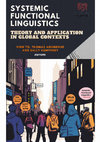
Papers from the First International Online Systemic Functional Linguistics Interest Group Conference (SFLIG2021), 2023
It is our great pleasure and honour to present to you this research collection, entitled Systemic... more It is our great pleasure and honour to present to you this research collection, entitled Systemic Functional Linguistics Theory and Application in Global Contexts. The papers in this peer-reviewed conference proceedings have been selected from those presented at the 1st International Online Systemic Functional Linguistics (SFLIG) Interest Group Conference co-hosted by the University of Tasmania, the Australian Catholic University, Molloy College, and the University of British Columbia in November 2021. The 1st International Online SFLIG Conference (SFLIG 2021) was organised by an international team of Systemic Functional Linguistics (SFL) scholars in Australia, Asia, the Americas, Africa, and Europe, and with the help of two ICT/data support staff from the University of Tasmania.
This collection includes 19 research papers from authors across the globe. It showcases a diversity of topics, reflecting the various strands of the conference under the broad theme of SFL theory and application in the contemporary global context. The political, health and environmental challenges the world faces make it ever more important to develop understandings of SFL theory and its real-world applications. The proceedings present research findings from projects investigating SFL concepts in different fields such as education, engineering, translation, politics, health, and media across the globe, including underrepresented research contexts such as Vietnam, Japan, Latin America, and Africa.
Please download the ebook using the DOI provided. We hope you will enjoy reading this research collection. May it provide you with inspiration and direction for future studies.
Editors: Vinh To, Thomas Amundrud and Sally Humphrey
Lexical metaphor is a familiar aspect of persuasive writing instruction in Australian primary sch... more Lexical metaphor is a familiar aspect of persuasive writing instruction in Australian primary schools. Another form of metaphor known as grammatical metaphor is far less commonly taught in school contexts, despite considerable research that describes it is a key feature of more advanced academic texts. This short paper adopted analytical frameworks from systemic functional linguistics (SFL) to investigate how one type of grammatical metaphor—known as interpersonal metaphor of modality— was used by Tasmanian primary school students who wrote the 16 highest scoring persuasive texts for the 2011 National Assessment Program – Literacy and Numeracy (NAPLAN) standardised writing test. The findings highlight how the high scoring primary school students used various types of interpersonal metaphor of modality to persuade readers, with particular differences across the Year 3 and Year 5 cohorts. The paper suggests that if primary school teachers teach their students about grammatical metaphor alongside lexical metaphor, this may assist young writers to better understand valued persuasive language features, and to make use of them in their writing.
Papers by Vinh To

Nominalisation in high scoring primary and secondary school persuasive texts
The Australian Journal of Language and Literacy
This paper makes visible particular persuasive language choices made by the highest scoring Tasma... more This paper makes visible particular persuasive language choices made by the highest scoring Tasmanian primary and secondary school students who completed the 2011 NAPLAN writing test. Specifically, it draws on systemic functional linguistics (SFL) to consider how these students used different forms of nominalisation to persuade readers about the 2011 writing prompt: that too much money is being spent on toys and games. The paper explores how the use of nominalisation differed across the primary and secondary school years and draws links to the Australian Curriculum: English which introduces the nominalisation in Year 8. Recommendations are made for primary and secondary school teachers who wish to equip students with the language resources to deal with the demands of NAPLAN testing, but also to write persuasively in more authentic educational and social contexts.
3 Enhancing Foreign Language Teachers’ Use of Multicultural Literature with an Analytical Framework for Interpreting Picturebooks about East Asian Cultures
Theoretical and Applied Perspectives on Teaching Foreign Languages in Multilingual Settings
8th OpenTESOL International Conference, 2020
The both cultural and intercultural awareness in children. One of the wellknown theories accounti... more The both cultural and intercultural awareness in children. One of the wellknown theories accounting for contemporary analysis of picturebooks is the social semiotics. However, research on intercultural awareness to date has not examined the ways in which non-Western picturebooks can be interpreted by Western semiotic frameworks. The primary aim of this paper is to demonstrate how images in East Asian picturebooks can be analyzed by a Western semiotic framework. To do this, we analyzed several selected double-page openings in one Vietnamese picturebook with a framework developed by Painter, Martin, and Unsworth (2013). The findings were that general meanings of the selected images can be interpreted with the proposed Western framework. However, the cultural meanings of these images are not revealed by using this framework. Further studies on a framework for interpreting cultural meanings of East Asian images in picturebooks are recommended. Findings and suggestions from this paper also provide helpful references for Vietnamese teachers of English to apply picturebooks in their classrooms.
Examining interpersonal metaphor of modality in successful primary persuasive texts
Since the days of Ancient Greece, lexical metaphor has been recognised as a powerful rhetorical d... more Since the days of Ancient Greece, lexical metaphor has been recognised as a powerful rhetorical device for making texts more persuasive. While this valued language choice is highlighted in persuasive writing instruction by Australian primary and secondary school teachers throughout the school years, another category of metaphor known as grammatical metaphor is considerably less ubiquitous in school settings, despite a substantial body of literature describing it as a key resource for successful writing in academic and professional contexts.
Ricerche di Pedagogia e Didattica. Journal of Theories and Research in Education, 2021
A large number of frameworks and models have been created to help translate the highly philosophi... more A large number of frameworks and models have been created to help translate the highly philosophical theory of critical literacy into practice. How these frameworks have been translated into classroom practice is an area much unexplored. The present study critically reviewed the frameworks of critical literacy applied in the classroom practices of language arts and language education within the last twenty years. Adapting the classification put forward by Luke and Woods (2009), the review divides the frameworks into critical pedagogy, textual, and practical approaches. The application of the frameworks identified in this review defies the rigid divisions between critical and textual approaches because text still plays an important role. The additional category of practical approaches is created to refer to frameworks that combine the critical and textual approaches and include more key tenets of critical literacy with a stronger focus on classroom practices. The more recent framewor...
English for non-English speaking children and Vietnamese for non-Vietnamese speaking children: A comparative analysis between Vietnamese and Australian parental perspectives
The metaphors we teach by: A Cumulative and cohesive design for Bachelor of Education English education units
At the University of Tasmania, the Australian Curriculum: English (2012) has been the impetus for... more At the University of Tasmania, the Australian Curriculum: English (2012) has been the impetus for a major restructure of our three Bachelor of Education (Primary and Early Childhood) units in English. Historically, the education faculty at the University of Tasmania has faced the challenges of a high turnover of staff, and an old Literacy curriculum which did not foreground SFL. Additionally the pervading metaphor of how to teach English was "a balanced literacy diet". According to Lakoff and Johnson (2003), metaphors are ideological and structure both thinking and practice. The old metaphor of "a balanced literacy diet" resulted in "bite-sized chunks" of content divided up and taught in a piecemeal manner, starving the students of deep and interconnected understandings of the field. In our restructure we have reconceptualised the metaphor to become "a rich and integrated model of English teaching", and we have designed the units to tell one c...
One of the priorities of the Australian Curriculum is concerned with developing Asia literacy, na... more One of the priorities of the Australian Curriculum is concerned with developing Asia literacy, namely 'Asia and Australia's engagement with Asia'. In terms of the English curriculum, an emphasis is placed on the representation of Asian voices and characters in literature that is studied in the classroom. However, previous research undertaken in schools to explore the use of multicultural literature by teachers has demonstrated an uncritical approach to literaturewith teachers tending to set up binary opposites of 'Australian' and 'the Other'. This paper will present the complexities of practice with Asian literature as represented through research with Tasmanian teachers. It will examine the factors that influence teachers to use Asian literature, their selection of Asian literature, and their classroom practice with Asian literature. Finally it makes some recommendations for a stronger future whereby Asian peoples, voices and stories are integrated more inclusively and critically in teachers' everyday practice.
Visual meanings in Vietnamese picture books: exploring Vietnamese artists’ perspectives on the Yin–Yang balancing
Social Semiotics, 2021
International Journal of Early Years Education, 2020
The cognitive, educational and economic benefits of learning a second language have been well doc... more The cognitive, educational and economic benefits of learning a second language have been well documented in the literature. This paper reports findings on perspectives of 13 stakeholders on the benefits of a case study about teaching Vietnamese to preschoolers in a regional early childhood context in Tasmania, Australia in 2017. Using a thematic approach in analysing 13 semi-structured interviews, five main themes on the benefits of the programme for the children identified were language development, cultural and global awareness, numeracy enhancement, reading engagement, and personal development. The results showed that participating educators and parents all had positive attitudes towards the early Vietnamese language programme, believed that there were many benefits and expressed a desire for its continuity. These findings suggest that there is a need and desire for second language education in early childhood in the Tasmanian context. Therefore, policy makers, educators and researchers should provide preschools access to learning and teaching resources of a language of their choice to benefit children's overall development and learning in early childhood, adolescence and beyond.
Indonesian Journal of Applied Linguistics, 2020
The practice of critical literacy in EFL contexts answers the need for EFL pedagogy that consider... more The practice of critical literacy in EFL contexts answers the need for EFL pedagogy that considers the complex social and political dimensions of foreign language learning. Many teachers are still discouraged from practicing critical literacy due to the many challenges they encounter. In this paper, we outline a practical framework that can help teachers navigate the complexity of practicing critical literacy in EFL contexts. The framework consists of four resources of critical literacy practice, namely curriculum and standards, students’ experiences and background, local social issues, and text selection. The classroom activities include text analysis and critique, bridging the word and the world, and social action. Particular issues in EFL pedagogy are addressed with implications for the practice of critical literacy.
Research Writing
What is Next in Educational Research?, 2016
A Comparative Study of Nominalisation in IELTS Writing Test Papers
Adopting the Functional Grammar advanced by Halliday (1985a), this
Research Writing: A Systemic Functional Linguistics Perspective
Research writing is vital in higher education, particularly in research-orientated institutions. ... more Research writing is vital in higher education, particularly in research-orientated institutions. It has been widely discussed and instructional implications have been raised. However, research writing in the theoretical framework of Systemic Functional Linguistics (SFL) is still a new discovery in the academic research discourse. There are different views on research writing and it depends on different factors such as subject areas, purposes, methodologies and perspectives. However, there are some common features of research writing which can be seen in the formality and complexity of written language. This presentation reports an exploratory study based on the analysis of four research abstracts to examine the grammatical complexity of research writing from the SFL perspective. The analysis focused on three grammatical features namely, lexical density, nominalisation and nominal groups. The findings show that the abstracts of research articles are of high density in terms of lexica...
English as a Foreign Language International Journal
University students studying English as a Foreign Language (EFL) are required to read and write s... more University students studying English as a Foreign Language (EFL) are required to read and write specialised academic genres. Genre-based pedagogy, developed from Systemic Functional Linguistics (SFL), teaches lexicogrammar and structure of these genres in context. The present study taught the structural staging of exposition and discussion genres to 17 students over a ten-week program, using the Gradual Release of Responsibility (GRR) framework. Pre- and post-instruction essays were collected. Results show that, post-intervention, students preferred the structurally complex discussion genre when responding to a short essay question. There was a small improvement in the use of main genre stages, while the use of generic sub-stages showed the most improvement. Students’ pre-instruction use of main staging suggested some familiarity with argument genres from previous EFL learning, although incidences of sub-stage crossovers and repeated sub-stages in the pre-instruction essays showed a...
Conversation as an interview method in research
Conversation is the essence of human interaction. From the research point of view, conversation c... more Conversation is the essence of human interaction. From the research point of view, conversation can play an important role in data collection. It has a motivating power in eliciting qualitative data, particularly for those who use thematic analysis and grounded theory as a research approach. Conversational Analysis has provided significant insights about the function and structure of conversation as a linguistic acti vity. This chapter discusses the important role of conversation in research and it also examines the challenges facing researchers in thei r use of conversation as a data collection tool. Interview is one of the most commonly used methods of data collection in qual itative research. Conversation can be a powerful method for data collection. This chapter will discuss the advantages and challenges of using conversation in data research collection.
Applying Halliday’s linguistic theory in qualitative data analysis
Qualitative Research Journal, 2015
Purpose– The purpose of this paper is to discuss the usefulness of Halliday’s linguistic theory k... more Purpose– The purpose of this paper is to discuss the usefulness of Halliday’s linguistic theory known as Systemic Functional Linguistics (SFL) in analysing qualitative data. In order to do this, it initially presents an overview of SFL, and then explains how and why four linguistic features namely, nominalisation, grammatical metaphor, thematic structure and lexical density are useful in examining qualitative data. The paper also discusses three social metafunctions of language known as the ideational, the interpersonal and the textual metafunctions which are significant for understanding and interpreting texts.Design/methodology/approach– This paper employs SFL as the main theoretical framework to discussing the usefulness of this linguistics theory in qualitative data analysis.Findings– SFL can be seen as a paradigm shift in linguistic theory moving away from the traditional focus on syntax to the inclusion of the interface between language and pragmatics. The focus of SFL is lang...



Uploads
Conference Presentations by Vinh To
This collection includes 19 research papers from authors across the globe. It showcases a diversity of topics, reflecting the various strands of the conference under the broad theme of SFL theory and application in the contemporary global context. The political, health and environmental challenges the world faces make it ever more important to develop understandings of SFL theory and its real-world applications. The proceedings present research findings from projects investigating SFL concepts in different fields such as education, engineering, translation, politics, health, and media across the globe, including underrepresented research contexts such as Vietnam, Japan, Latin America, and Africa.
Please download the ebook using the DOI provided. We hope you will enjoy reading this research collection. May it provide you with inspiration and direction for future studies.
Editors: Vinh To, Thomas Amundrud and Sally Humphrey
Papers by Vinh To