Edited Volume by Xianliang DONG
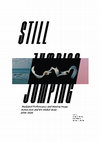
This anthology presents a multifaceted exploration of screendance and movement-image arts, bringing together a carefully curated collection of essays, roundtable discussions, and artistic reflections. It examines the reimagining of traditions, the body as a site of cultural critique, and the evolving interplay between movement and media technologies.
Spanning experiences from Hong Kong, East Asia, Southeast Asia, Europe, and beyond, this volume provides fresh perspectives for artists, curators, and scholars. It invites readers to reconsider the role of dance and moving images within contemporary art and to reflect on their broader cultural, social, and political implications.
Marking the 20th anniversary of Jumping Frames, this anthology celebrates two decades of artistic innovation, offering an inspiring resource for those seeking to explore the dynamic convergence of dance and media arts and envisioning new possibilities for the future of movement-image practices.
Papers by Xianliang DONG
Global and Planetary Change, 2025
Journal of Medical Biography, 2023
Journal of Dance Education, 2022
《文化研究》Router: A Journal of Cultural Studies, 2019
《台灣社會研究季刊》Taiwan: A Radical Quarterly in Social Studies, 2018
在梳理了過往研究與疾病隱喻的理論界限之後,本文提出如何批判地運用醫學知識與歷史素材的研究方法,進而指出在除去隱喻的普遍特徵後,香港雨傘運動後的流感隱喻的特殊之處在於兩點:單一使用「中港矛盾」作為主要內容;與沙士有密切聯繫。接著,本文先是對流感隱喻中時常回顧的沙士隱喻的構建過程作出描述,然後提出流感隱喻既承續了沙士隱喻,自身又有所轉變。本文認為流感隱喻較少吸收歷時事件,而是輕易將「中心/邊緣」與「患病/健康」兩組意象複合,同時以「排他」與「區隔」作為唯一的治療手段。最後,本文將流感隱喻置於「本土主義」思潮的歷史中考量,認為流感隱喻加深了人們對於中港矛盾的刻板印象,它構建了內地人一種「患病」的本質,賦予「中港區隔」以合理性,但此方案潛藏著前所未有的暴力,它最終可能演變為對於個體的強制審判與懲罰。
關鍵詞:疾病隱喻、流行性感冒、沙士、本質化、中港區隔
This article examines the metaphor of influenza after the Umbrella Movement in Hong Kong in 2014. With reference to the metaphor of Severe Acute Respiratory Syndrome (SARS), this article draws on the metaphor to discuss the political predicament of Hong Kong, as well as the intensely conflicting China-Hong Kong relationship in contemporary time.
By recapitulating the theories on illness as metaphor, this article will offer a critical study of both the pathological knowledge and historical materials to analyze influenza as metaphor in contemporary Hong Kong. The second part of this article will not only delineate the common characteristics of the metaphor of influenza, but also shed light on the specificities of such metaphor in the context of Hong Kong in two ways: (1) the metaphor of influenza is particularly deployed to account for the “China-Hong Kong conflict”; (2) such metaphor is inseparably linked to the metaphor of SARS. For the remaining parts, the article will explicate the discursive process of the metaphor of SARS that has been often referred to the metaphor of influenza. It argues that the metaphor of influenza can be understood as an “inheritance” of the metaphor of SARS, with modification and appropriation. Rather than referencing to the diachrony, the metaphor of influenza usually aligns the binary opposition of “center/periphery” with the one of “illness/health”, while it has frequently used “exclusion” and “segmentation” as the remedy for such dilemma. Finally, this article looks into how the metaphor of influenza has developed in the context of “local consciousness”. It concludes that the metaphor reiterates stereotypes of the China-Hong Kong conflict through essentializing the “illness” of mainland Chinese, thereby legitimizing the China-Hong Kong segregation. The legitimacy of such segregation implies the potential violence against the mainland Chinese and may become a coercive trial and punishment for individuals.
Keywords: illness as metaphor, influenza, Severe Acute Respiratory Syndrome, essentialization, China-Hong Kong segregation
Book Chapters by Xianliang DONG
鑽燧薪傳:香港城市大學中文及歷史學系研究生論文集(上冊), 2024
Shadow of Biological Warfare,” Journal of Medical Biography 32.2 (2024): 194-204. 2023 Online First. 中文版匿名評審的意見十分寶貴,謹致謝忱。
Hong Kong Dance Overview 2018, 2021
The Emerald Handbook of Narrative Criminology, 2019
Interviews by Xianliang DONG

舞蹈手札Dance Journal/HK, 2022
Costumes are an essential part of dance performances, yet wardrobe departments are rare in the Hong Kong dance scene. Apart from the three ‘flagship’ dance companies which receive the most government funding, other groups do not have enough resources to establish such a department. So what kind of people work in wardrobe departments? How do they develop and how do they operate? These are fascinating areas to explore for audiences, artists, researchers and educators outside the industry. Each dance company’s wardrobe department is unique, and the work and lives of the people inside them are worth understanding. This article is an excerpt from the author’s interview with City Contemporary Dance Company’s (CCDC) Wardrobe Manager Linda Lee. She has led the department for over 30 years, and our conversation focused on the department’s evolution and organisation. To make it easier to read, the article was partly translated from colloquial to written language, and efforts were made to preserve the flow of the dialogue, while some of the contents were simplified. The content in square brackets is supplementary information.
Reviews by Xianliang DONG
《文化研究》Router: A Journal of Cultural Studies, 2020
《文化研究季刊》 Cultural Studies Quarterly, 2018
Conferences by Xianliang DONG
Modernization at the Crossroads: Revisiting Martha Graham’s 1974 Asian Tour through Sinophone Perspective
The missing piece of freelance performing arts workers through the COVID-19 pandemic in Hong Kong
香港(研究)作為方法:論香港的「疾病敘事」——以感冒、流行性感冒、沙士為例
Cold War Influenza: The Discourse of Hong Kong Flu and Its Controversies, 1968-1972