Monographs by Yehuda Halper
Averroes on Pathways to Divine Knowledge, 2025
The twelfth-century Andalusian philosopher Averroes sought to understand the divine in a way inde... more The twelfth-century Andalusian philosopher Averroes sought to understand the divine in a way independent of religious theology, by turning to the philosophical works of Aristotle and, to a lesser extent, Plato. In doing so, he established standards of scientific inquiry into God that were and remain highly influential on Jewish and Christian thought. Averroes, however, does not provide much in the way of demonstrative knowledge of God, and most of his arguments remain dialectical, rhetorical, or political. This volume explores the various pathways towards attaining divine knowledge that we find in Averroes’ commentaries on Aristotle’s De Anima, Metaphysics, and Nicomachean Ethics, and on Plato’s Republic, along with Averroes’ Epistle on Divine Knowledge, Decisive Treatise, and more.
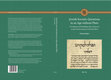
Maimonides Library for Philosophy and Religion, Brill, 2021
Winner: Goldstein-Goren Book Award, 2022
Yehuda Halper examines Jewish depictions of Socrates an... more Winner: Goldstein-Goren Book Award, 2022
Yehuda Halper examines Jewish depictions of Socrates and Socratic questioning of the divine among European and North African Jews of the 12th-15th centuries. Without direct access to Plato, their understanding of Socrates is indirect, based on legendary material, on fragmentary quotations from Plato, or on Aristotle. Out of these sources, Jewish authors of this period formed two distinct views of Socrates: one as a wise, ascetic, monotheist, and the other as a vocal skeptic. The latter view has its roots in Plato's Apology where Socrates describes his divine mandate to question all knowledge, including knowledge of the divine. After exploring how this and similar questions arise in the works of Judah Halevi and the Hebrew Averroes, Halper traces how such open questioning of the divine arises in the works of Maimonides, Jacob Anatoli, Gersonides, and Abraham Bibago.
Ben Gurion University Website, 2022
The Goldstein-Goren International Center for Jewish Thought is proud to announce the joint winner... more The Goldstein-Goren International Center for Jewish Thought is proud to announce the joint winners of the Triennial award for the best book in Jewish Thought for the years 2019-2021.
From among over seventy books submitted for consideration. The winning submissions are:
Yehuda Halper, Jewish Socratic Questions in an Age without Plato: Permitting and Forbidding Open Inquiry in 12-15th Century Europe and North Africa. Brill (2021), 266 pp. (English)
and
Maoz Kahana, A Heartless Chicken: Religion and Science in Early Modern Rabbinic Culture. Bialik Institute (2021), 432 pp. (Hebrew)
Bollettino della Società Filosofica Italiana, 2023
Renaissance Quarterly, 2025
Papers by Yehuda Halper
The Oxford Handbook of Jewish Philosophy, 2026
Many medieval Jewish philosophers had a commitment to an Aristotelian program of study, even thou... more Many medieval Jewish philosophers had a commitment to an Aristotelian program of study, even though they usually approached this program indirectly through commentaries on Aristotle. In its earliest versions, this program appears as a loosely construed order of study (logic, physics, metaphysics, ethics, and politics) and a set of central concepts (substance, accident, form, matter, actuality, telos, nature, etc.), which made their way to Jewish thinkers via Arabic translations and commentaries. Later, it consisted of detailed study of Hebrew translations of some of those commentaries, especially those of Averroes, most often without the texts of Aristotle. These ways of studying the Aristotelian works defined how medieval Jews understood philosophy and science and what subjects they saw as beyond the reach of human understanding. In this chapter, we shall trace the outline of this program of study, starting from its appearance among Arabic-speaking Jews, then turning to Maimonides’s treatment of it, and finally to the formation of various scientific curricula in Hebrew in Southern Europe. This outline will trace not only what medieval Jews studied when they studied philosophy and science, but what they considered scientific and philosophical and what was left for other areas of thought.
Aleph: Historical Studies in Science and Judaism, 2024
An incomplete and anonymous Hebrew translation of Al-Fārābī’s Art of Dialectic is an example of a... more An incomplete and anonymous Hebrew translation of Al-Fārābī’s Art of Dialectic is an example of an early philosophical translation, possibly dating to the twelfth century, produced independently of the Tibbonide tradition. Similar in some of its terminology to other non-Tibbonide translations of Al-Fārābī, this translation was heavily revised numerous times, sometimes incorporating a small number of Tibbonide terms. However, these revisions largely reflect the struggles of different editors to accurately render its meaning. The text continued to be studied in the fourteenth century. One anonymous marginal gloss commentary, found in two manuscripts, sought to clarify the non-Tibbonide terminology of the translation with Tibbonide terminology. This commentary’s Tibbonizing explanations were apparently informed by the works of Tibbonide translators such as Jacob ben Makhir, Ibn Tibbon, and Moses Ibn Tibbon. Given these influences, it is plausible that the commentary originated in Provence. However, a comparison of the commentary with both the translation and the Arabic original of Art of Dialectic suggests that the commentator did not have access to the Arabic text. As a result, the comments are sometimes misleading as to Al-Fārābī’s work. Also in the fourteenth century, Ṭodros Ṭodrosi of Arles translated a few sections of this text from Arabic into Hebrew, seemingly unaware of the earlier non-Tibbonide translation. Ṭodrosi’s translations are in the Tibbonide style and adhere quite closely to the Arabic. They would likely have been more accessible to Provencal Jewish philosophers of his time.

Signs and Signification in a Global Comparative Perspective, ed. Maria Avxentevskaya and Glenn W. Most, 2025
Moses Maimonides (1138–1204) sought to explain how one signifies God in Jewish prayers, rituals, ... more Moses Maimonides (1138–1204) sought to explain how one signifies God in Jewish prayers, rituals, and texts with an account of signification derived from Aristotle. Maimonides does this by integrating into his Guide of the Perplexed a discussion of what it means to say that something is something else (that X is Y), which Aristotle called the “categories.” For Maimonides, God cannot be described by any of the Aristotelian categories, except for the one concerning His actions. Aside from describing what He is not (sometimes called negative theology), God is assigned an ineffable name, i.e., a name that cannot be spoken or pronounced. This ineffability highlights human inability to signify God’s essence. The texts presented in this chapter show the Aristotelian background of this argument and the structure Maimonides gives to it. They are a preliminary account of the ten categories in Samuel’s summary of al-Fārābī’s Paraphrase of Aristotle’s Categories, as included in Samuel’s Explanation of Unusual Terms; Maimonides’s brief account in Guide I.52 of applying those categories to God in light of the doctrine of negative theology; and Maimonides’s account in Guide I.62 of how to understand the names of God.
Transforming Philosophy: Late Medieval Knowledge in Transition, ed. Karsten Engel and Ueli Zahnd , 2026
Jewish Quarterly Review, 2025
In 1232, Jacob Anatoli translated the first complete corpus of Aristotelian logic into Hebrew in ... more In 1232, Jacob Anatoli translated the first complete corpus of Aristotelian logic into Hebrew in the form of Averroes’s five central logical middle commentaries. In an afterword to these translations, Anatoli thanks Emperor Frederick II Hohenstaufen for abundant financial support. Although scholars have suggested that Anatoli received imperial support in return for his contribution either to the Latin translation of the same works or to the intellectual milieu of Naples at the time, I suggest that in fact the emperor wanted Anatoli to prepare the Hebrew translation of these works. Indeed, in 1231 Frederick II had enacted legislation for southern Italy requiring three years of studying logic before one could begin studying medicine. I suggest that Frederick II’s goals in supporting this project were to enable Jews to acquire the same preparation perhaps along the way to becoming recognized—even somewhat informally—as medical doctors. When Anatoli moved from the Midi region of France to Naples and the imperial court and then adapted his project underway translating logical texts to the needs of the court, he was effectively contributing to this goal.
Revisiting Medieval Dialectics, ed. Ana Maria Mora-Marquez and Gustavo Fernandez Walker, 2025
n 1263, Moses Nahmanides debated Friar Pablo Christiani in a public setting, accounts of which su... more n 1263, Moses Nahmanides debated Friar Pablo Christiani in a public setting, accounts of which survive in both Latin and Hebrew. This contribution begins by comparing these parallel, but not identical accounts and suggesting that this debate was set up using the principles of questio disputational format. Still, these principles went completely unrecognized by Nahmanides as he claimed that his arguments had won the day, even as many of those arguments were probably dismissed on procedural grounds. When Hasdai Crescas wrote his Refutation of the Christian Principles in 1398, he seems to have anticipated such procedural objections and to have prepared his readers for the questio format, or something like it. Yet the language of Crescas’ Refutation suggests that he did not draw directly on scholastic disputational practice or accounts of these practices. Rather, he seems to have drawn on a Hebrew tradition of studying Aristotelian dialectic. Between 1263 and 1398, Jews of the Midi studied Hebrew translations of commentaries on Aristotle’s Topica by Al-Fārābī and Averroes, wrote their own super-commentaries on those works, and may even have begun to develop a Hebrew tradition of disputation. This article proposes that the fourteenth century study and perhaps practice of Aristotelian dialectic in the Midi likely made it to Barcelona, enabling Crescas to account for disputational practices in a way that Nahmanides could not.
Documenti e studi sulla tradizione filosofica medievale, 2024
This paper examines two Jewish thinkers of the early 14th century who applied dialectical methods... more This paper examines two Jewish thinkers of the early 14th century who applied dialectical methods to questions in physics. One of these, Immanuel of Rome, did so in a humorous manner, poking fun at the ways in which dialectic can be used to promote sophisms. The other, Jedaiah Bedersi, probably of Béziers, did so in two epistles that critique another Hebrew physical thinker, possibly Levi Gersonides. Both of these thinkers employ dialectic in a literary way, i.e., in a written form, not in spoken form. Both employ dialectic in an aggressive manner, designed to attack and defeat the physical arguments of their opponents. Even though Immanuel’s approach is one of ridiculing dialectic, his words suggest a limited interest in dialectic that existed outside of his purview. One place we find such interest is in the works of Jedaiah.
Materia giudaica: Rivista dell’Associazione italiana per lo studio del giudaismo, 2023
Jacob Mantino’s translation of a critical passage of Averroes’ Middle Commentary on Aristotle’s D... more Jacob Mantino’s translation of a critical passage of Averroes’ Middle Commentary on Aristotle’s De Interpretatione, 16a3-8, contains at least one philosophically significant alteration from the earlier translation, in addition to stylistic changes. Averroes’ discussion of the connection between al-maᶜānī and al-mawjūdāt had come into William of Luna’s 13th century translation as concerning intentiones and res. Mantino changed the terms in question to res and entia respectively. He does something similar in his translation of a critical passage from Averroes’ Short Commentary on Aristotle’s Metaphysics. This is not merely a stylistic change, but one that promotes a kind of philosophical realism. Mantino could have accessed such realism through reading Maimonides’ Treatise on the Art of Logic and Abraham Farissol’s restatement / commentary on it, but he may also have been influence by Walter Burley or the Burelyanism then in vogue. Mantino’s translation choice, then, may have been philosophically motiva- ted to promote a realist reading of Averroes.
Leo Strauss on Religion: Writings and Interpretations, ed. S. Minkov and R. Namazi, 2024
The surviving remnants of Ralph Lerner's notes documenting Leo Strauss's lecture, "Abraham and Ma... more The surviving remnants of Ralph Lerner's notes documenting Leo Strauss's lecture, "Abraham and Maimonides," given at the University of Chicago Hillel House on April 30, 1953, are difficult reading, largely because they are somewhat fragmentary. In particular, they lack any kind of unifying thesis statement. Still, these notes present with relative frankness Strauss's understanding of the purpose of religious law according to Maimonides and raise the question of the connection between metaphysical speculation about the divine and religious law. Strauss's frankness here is reflected in the fact that these notes do not mention the esoteric vs. exoteric or hidden meanings of any kind. Strauss's lecture focuses on a series of dichotomies: Abraham vs. Moses, blind obedience vs. knowing the reasons for the laws, argument vs. legal compulsion, and Abraham ibn Daud vs. Moses Maimonides. The first of these is particularly important. Indeed, in the central paragraphs of the talk, paragraphs 4-6, Strauss goes so far as to talk about "two ways of understanding Judaism: Mosaic and Abrahamic." These 1 two ways of understanding Judaism are primarily based on Maimonides's , Book of Mishneh Torah Knowledge, Laws of Idolatry I, and III 29. In both places, Maimonides presents a Guide of the Perplexed purportedly historical account of Abraham's attacks on paganism and then Moses's attacks and implementation of the Law. Strauss highlights that for Maimonides the difference between Abraham's 2 Judaism and Moses's Judaism is that the latter is a Judaism, that is, it involves the Law. legislating According to Strauss, Maimonides "denied the legal character of what is given to Abraham." While Moses brought Israel the law, Abraham gave "private instruction needed to bring felicity for himself." In this connection, Strauss mentions Maimonides's , Book of Knowledge, Laws of Deot I, 7. There Maimonides discusses accustoming oneself to various habits and says that this is the path that Abraham taught his sons, quoting Genesis 18:19. Indeed, habituation is a major theme of the Laws of 3 Deot and legal compulsion is absent from the first four chapters. Thus, Strauss sets us up to contrast two different "understandings of Judaism." One is the legal understanding, associated with Moses and apparent in the various laws of the Torah and in the majority of the . The other is Judaism as a Mishneh Torah system of habituation, as described in Law of I-IV, in the , and perhaps also in Deot Eight Chapters Aristotle's . Nicomachean Ethics These two "understandings of Judaism" are also aimed at different groups. Abraham's Judaism is aimed at his sons and household (cf. Genesis 18:19), which Strauss considers Maimonides to extend to the "clan." Moses's Judaism is aimed at what is here termed "society." "Society" and its similar "social order" are modern terms without clear parallels in biblical or Maimonidean Hebrew or in Maimonides's Arabic, but here they seem to refer to a large group governed by law. Moses brings the Law, viz. the Torah, to the Israelites to perfect their society and to give them the tools to keep up that perfection by maintaining the EBSCOhost: eBook Collection (EBSCOhost) printed on 1/9/2025 1:10:04 PM UTC via BAR-ILAN UNIVERSITY. All use subject to .
British Journal for the History of Philosophy, 2024
Despite its position in an introductory work to logic, the account of continuity presented by Abū... more Despite its position in an introductory work to logic, the account of continuity presented by Abū Naṣr Al-Fārābī in his paraphrase of Aristotle’s Categories is apparently even less accessible to the beginner than Aristotle’s original. This is in part because Al-Fārābī integrated elements of the accounts of continuity in Aristotle’s Physics and Metaphysics into an account mainly derived from Aristotle’s Categories. While Al-Fārābī’s account chiefly follows Aristotle’s Categories 6 in describing a continuous object that can be divided into parts with a shared boundary, it borrows the terminology of limits from Physics 5 and the notion of quantity as divisible into its parts from Metaphysics 5.13. In doing so, Al-Fārābī defines continuity using a notion of a limit without determining whether or not it was part of the continuous quantity. This definition could also accommodate atomists, since it would work even if the limit were an atom or several atoms that were part of the continuous object. The broadness of this definition is probably intended to allow students of logic who may have atomist tendencies to accept the account of quantity in the categories tradition, even though they may not be ready to reject atomism until after studying physics.
Revue des Études Juives, 2024
In the 13th century, Jacob Anatoli and Moses Ibn Tibbon translated a significant Aristotelian log... more In the 13th century, Jacob Anatoli and Moses Ibn Tibbon translated a significant Aristotelian logical and scientific corpus in the form of Averroes’ Middle Commentaries from Arabic into Hebrew and also wrote a series of independent commentaries on the Bible. Despite their investment in these two realms of thought, Averroes and the Bible, there is surprisingly little overlap between them. The Biblical commentaries are clearly philosophical, but do not mention very much of the Averroes that their authors translated. One reason for this is that the commentaries are somewhat supplemental to the Averroes translations, and are intended to supply areas of thought not covered in those translations. Thus, for example, both discuss poetics in the context of Biblical poetry, such as Song of Songs and Psalm 45. Both accounts are clearly based on the Arabic tradition of reading Aristotle’s Poetics, but neither author made that work or any summary of it available in Hebrew. Instead, they turn to the Bible for poetic syllogisms, and especially poetic meaning, i.e., allegory. Their theories are developed and heavily influenced by Al-Fārābī and Averroes. Yet, by including them in works that are not purely philosophical, both Jacob Anatoli and Moses Ibn Tibbon maintain a separation between science and scientific syllogisms and the Bible, with its poetic, allegorical methods of argumentation.
Durant le XIIIe siècle, Jacob Anatoli et Moïse Ibn Tibbon ont constitué un important corpus logique et scientifique aristotélicien en hébreu, à travers la traduction depuis l’arabe d’un nombre conséquent des Commentaires moyens d’Averroès. Ils ont également composé des traités indépendants et des commentaires sur la Bible. Malgré le travail qu’ils engagent en parallèle dans ces deux domaines intellectuels, Averroès et la Bible, il y a étonnamment peu de recoupement entre les deux corpus. Les commentaires bibliques sont d’une teneur clairement philosophique, mais font très peu référence aux textes d’Averroès que leurs auteurs avaient pourtant traduits ou traduisaient. Une manière de l’expliquer tient au fait que les commentaires sont en quelque sorte des compléments aux traductions d’Averroès et visent à couvrir des domaines de la pensée, absents de ces traductions. À titre d’exemple, les deux auteurs abordent la poétique à propos de textes bibliques comme le Cantique des Cantiques ou le psaume 45. Leurs interprétations sont fondées de manière évidente sur la Poétique d’Aristote, mais aucun des deux auteurs n’a pris le soin de rendre ce texte ou son résumé accessible en hébreu. C’est vers le texte biblique qu’ils se tournent pour analyser les syllogismes poétiques et, plus spécifiquement, l’usage poétique du langage que constitue l’allégorie. Leur approche est massivement influencée par Al-Fārābī et Averroès. Toutefois, en proposant ces développements dans des oeuvres qui ne sont pas de nature strictement philosophique, Jacob Anatoli et Moïse Ibn Tibbon maintiennent une séparation entre, d’un côté, la science et les syllogismes scientifiques et, de l’autre, la Bible, caractérisée par ses modes poétiques et allégoriques de raisonnement.
Ad Argumenta 4, 2024
Following the Arabic tradition, medieval Hebrew commentaries on Aristotle’s Topica and De Sophisi... more Following the Arabic tradition, medieval Hebrew commentaries on Aristotle’s Topica and De Sophisitics Elenchis understood Zeno’s paradoxes of motion as dialectical fallacies related to widely-held opinions or incorrect inductive arguments. Following Al-Fārābī and Averroes, Hebrew Aristotelian commentators include discussions of Zeno’s paradoxes of motion in their commentaries on Topica and De Sophisitics Elenchis. Aristotle’s own discussions of Zeno’s paradoxes in those works, however, merely allude to the difficulties without presenting solutions. Indeed, they point elsewhere, most likely to the Physica where Aristotle provides a detailed account of those paradoxes and their solutions. The shift in emphasis in the discussions of Zeno’s paradoxes of motion as dialectical paradoxes in the Topica and De Sophisticis Elenchis in the works of Al-Fārābī and Averroes was likely due to the importance of those paradoxes for Kalām atomism. Hebrew commentators inherited this approach, even though they did not operate in the context of the Kalām.



Uploads
Monographs by Yehuda Halper
Yehuda Halper examines Jewish depictions of Socrates and Socratic questioning of the divine among European and North African Jews of the 12th-15th centuries. Without direct access to Plato, their understanding of Socrates is indirect, based on legendary material, on fragmentary quotations from Plato, or on Aristotle. Out of these sources, Jewish authors of this period formed two distinct views of Socrates: one as a wise, ascetic, monotheist, and the other as a vocal skeptic. The latter view has its roots in Plato's Apology where Socrates describes his divine mandate to question all knowledge, including knowledge of the divine. After exploring how this and similar questions arise in the works of Judah Halevi and the Hebrew Averroes, Halper traces how such open questioning of the divine arises in the works of Maimonides, Jacob Anatoli, Gersonides, and Abraham Bibago.
From among over seventy books submitted for consideration. The winning submissions are:
Yehuda Halper, Jewish Socratic Questions in an Age without Plato: Permitting and Forbidding Open Inquiry in 12-15th Century Europe and North Africa. Brill (2021), 266 pp. (English)
and
Maoz Kahana, A Heartless Chicken: Religion and Science in Early Modern Rabbinic Culture. Bialik Institute (2021), 432 pp. (Hebrew)
Papers by Yehuda Halper
Durant le XIIIe siècle, Jacob Anatoli et Moïse Ibn Tibbon ont constitué un important corpus logique et scientifique aristotélicien en hébreu, à travers la traduction depuis l’arabe d’un nombre conséquent des Commentaires moyens d’Averroès. Ils ont également composé des traités indépendants et des commentaires sur la Bible. Malgré le travail qu’ils engagent en parallèle dans ces deux domaines intellectuels, Averroès et la Bible, il y a étonnamment peu de recoupement entre les deux corpus. Les commentaires bibliques sont d’une teneur clairement philosophique, mais font très peu référence aux textes d’Averroès que leurs auteurs avaient pourtant traduits ou traduisaient. Une manière de l’expliquer tient au fait que les commentaires sont en quelque sorte des compléments aux traductions d’Averroès et visent à couvrir des domaines de la pensée, absents de ces traductions. À titre d’exemple, les deux auteurs abordent la poétique à propos de textes bibliques comme le Cantique des Cantiques ou le psaume 45. Leurs interprétations sont fondées de manière évidente sur la Poétique d’Aristote, mais aucun des deux auteurs n’a pris le soin de rendre ce texte ou son résumé accessible en hébreu. C’est vers le texte biblique qu’ils se tournent pour analyser les syllogismes poétiques et, plus spécifiquement, l’usage poétique du langage que constitue l’allégorie. Leur approche est massivement influencée par Al-Fārābī et Averroès. Toutefois, en proposant ces développements dans des oeuvres qui ne sont pas de nature strictement philosophique, Jacob Anatoli et Moïse Ibn Tibbon maintiennent une séparation entre, d’un côté, la science et les syllogismes scientifiques et, de l’autre, la Bible, caractérisée par ses modes poétiques et allégoriques de raisonnement.