Overview
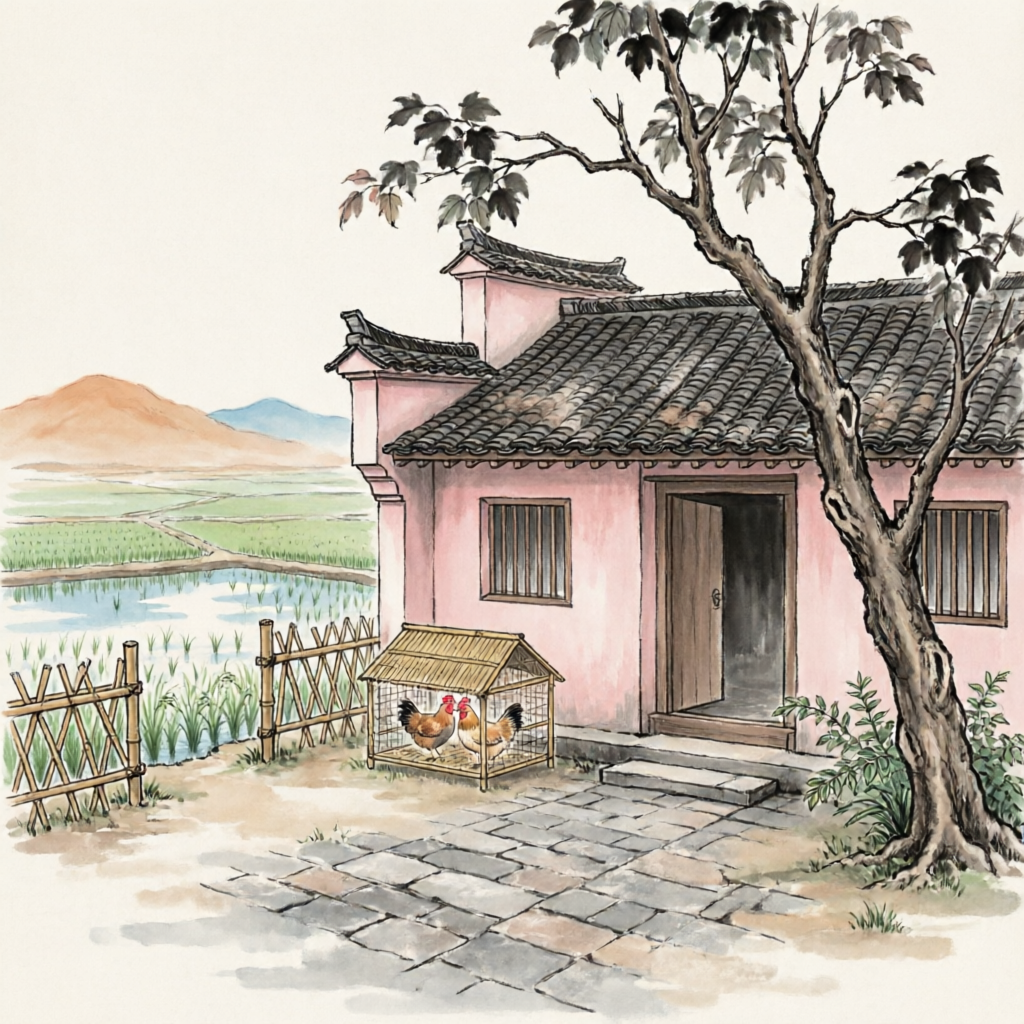
The Nong Jia (农家), also known as the Farmers' School or School of the Tillers, was one of the philosophical schools of ancient China. Founded by the legendary Emperor Shennong (神农氏), it combined agricultural wisdom, martial arts, and political philosophy. The school's motto "地泽万物,神农不死;将相王侯,宁有种乎" translates to "The earth nourishes all things, Shennong is immortal; generals and kings, are they born of nobility?" reflecting both their reverence for agricultural principles and their revolutionary stance against aristocratic privilege.
History
Ancient Origins
The Nong Jia traces its origins to Emperor Shennong, who was credited with six great achievements that benefited humanity: creating weapons, tasting hundreds of herbs to identify medicinal plants, cultivating grains, understanding musical scales, developing irrigation systems, and creating calendars. These achievements became the foundation for the Six Halls (六堂) of the later Nong Jia, each corresponding to one of these accomplishments.
Historical records indicate that Shennong gathered tribal leaders at the Battle of Banquan's field to establish harmony between the Yan and Yellow Emperor tribes. This decision was recorded as the "Yan Decision" (炎帝诀), becoming a unique voting method within the Nong Jia where a simple majority of the Six Hall Masters could initiate actions, with minority opinions yielding to the majority.
Legend states that Shennong discovered the patterns of the four seasons, naming them as the Twenty-Four Solar Terms (二十四节气), which helped farmers remember the cycles of planting and harvesting. From these observations, he developed a sophisticated martial formation called "Earth and Twenty-Four" (地泽二十四阵法), with each movement named after a solar term. This formation could be initiated by two or more practitioners, growing more powerful with additional participants.
However, the Nong Jia's ancestors also discovered another temporal pattern—the leap year (闰年有366天)—which created a vulnerability in the formation: "365, 365, 365, followed by 366." This became the only known weakness in the Earth and Twenty-Four formation.
Within the Nong Jia, there existed a distinction between inner clans (内姓) and outer clans (外姓). The Tian clan (田氏) was the most powerful inner clan, consistently controlling three of the Six Halls throughout the organization's history.
Warring States Period
During the late Warring States period, the Nong Jia played a significant role in political affairs. The previous Xia Kui (侠魁, Grand Leader) issued a Shen Nong Order (神农令), summoning the Six Hall Masters to assassinate Bai Qi, a highly Qin general who had killed over a million soldiers and earned the deep enmity of the six states. After a year of practicing the Earth and Twenty-Four formation, the Nong Jia successfully assassinated Bai Qi (though this fact was known to very few people).
In the late Warring States period, the Nong Jia received financial support from Qin's Right Chancellor Changping Jun, which accelerated their expansion in the Chu region and Central Plains. Changping Jun frequently participated in Nong Jia affairs, earning the deep admiration of Xia Kui Tian Guang (田光) for his strategic wisdom and demeanor. Through ten years of development, the Nong Jia's strength grew significantly, becoming an important force for Changping Jun in the martial world.
Tian Guang, known as "Tian Guang the Chivalrous Hero" (田光节侠) in Yan, gained considerable fame for his bravery and strategic acumen, earning the appreciation of Crown Prince Dan of Yan.
In the 26th year of King Xi of Yan's reign, the Qin defector Fan Yuqi arrived in Yan. Crown Prince Dan and Tian Guang met in a remote cottage to discuss the matter. After confirming Dan's determination to resist Qin, Tian Guang revealed his true identity as Xia Kui and presented Changping Jun's plan to assassinate the Qin king, earning Dan's respect and approval.
The Nong Jia formed a secret alliance with the Mohist school and the Xiang clan. Their goal was to persuade Dan to ally with the Mohists for the assassination plan. However, they were firmly rejected by the Mohist leader Six-Fingered Black Hero (六指黑侠). Dan's wife, Yan Fei, decided to help her husband achieve his ambition by secretly killing Black Hero, hiring the "Liusha" (Flowing Sand) organization to assassinate him. After being poisoned by Yan Fei's Six Souls Terror Curse (六魂恐咒), Black Hero encountered the deadly sword of Liusha leader Wei Zhuang. Though he barely escaped, he eventually died in the Mohist sanctuary. While Black Hero was missing, Dan stabilized the Mohist school and gained the approval of its members. Eventually, with the witness of Xia Kui Tian Guang and many Mohist leaders, Dan succeeded Black Hero as Mohist leader. Due to this cooperation, the relationship between the Nong Jia and Mohists grew closer.
In the 28th year of King Xi of Yan's reign, Qin forces reached the Yi River. Mohist leader Dan and Nong Jia Xia Kui Tian Guang planned the details of the assassination attempt: the wandering swordsman Jing Ke would pretend to be a Yan envoy, accompanied by the top Mohist fighter Qin Wuyang, carrying Fan Yuqi's head and a map of Yan state to King Zheng of Qin, with the broken sword "屠龙" (Dragon Slaying) hidden in the map for an assassination attempt. This plan ultimately failed, with both Jing Ke and Qin Wuyang dying under the swords of Qin's top swordsman Gai Nie.
Internal Affairs and Conflicts
Within the Nong Jia, the Tian brothers Tian Meng (田猛) and Tian Hu (田虎) were renowned for their exceptional martial skills, leading to the saying "There is no second sun in the sky, but there are fierce tigers in the Tian clan." Each led one of the Six Halls—Tian Meng led the Lietang Hall (烈山堂) and Tian Hu led the Chiyou Hall (蚩尤堂).
The Tian family's influence grew when Ro's top-tier assassin Jingqu (惊鲵) fled and sought refuge in the Lietang Hall. Tian Meng, impressed by her extraordinary beauty, married her and adopted her young daughter, renaming her Tian Yan (田言). Shortly after, Jingqu gave birth to a son for Tian Meng, named Tian Ci (田赐).
During Qin's campaign to conquer the six states, the martial world was in turmoil, and the Nong Jia recruited many skilled fighters, gradually strengthening the combat capabilities of the middle and upper levels of the Six Halls.
- The lone assassin Gu Yao from the Taihang Mountains in Zhao joined the Chiyou Hall after Zhao's fall;
- The feared assassin Yanu joined the Lietang Hall;
- Mei Sanmei, a direct descendant of the Armor School in Wei, joined the Lietang Hall after becoming disillusioned with the King of Wei;
- Qing Qing, a high-level master of the Armor School in Wei, was captured after Qin flooded Daliang. Later, bribed by Zhu Jia of the Shennong Hall with a substantial sum, he joined the Shennong Hall.
The Kuiwei Hall master had participated in the assassination of Bai Qi but later abandoned secular affairs to go to the Nong Jia's sacred place—the Six Sages Tomb of Emperor Yan at Daze Mountain. The Kuiwei Hall master became Bingzhu (兵主, Lord of Weapons) among the Six Elders. The hall's affairs were left to his two disciples—Chen Sheng and Wu Kuang. Chen Sheng became the new Kuiwei Hall master, while Wu Kuang became the hall's chief administrator. The two were like brothers, skilled in martial arts, and the Kuiwei Hall's power gradually grew, even rivaling the Lietang Hall led by Tian Meng.
Zhu Zhong, the adopted son of Shennong Hall master Zhu Jia, was the most capable disciple in the hall but coveted power and wealth. He switched allegiance to the Tian clan, changing his name to Tian Zhong. With the Tian clan's support, he became the new Gonggong Hall master. The relationship between the Tian clan and Zhu Jia gradually deteriorated.
Wu Kuang, the Kuiwei Hall's chief administrator, married Tian Mi from the Tian clan. Tian Mi was stunningly beautiful, admired by other Nong Jia disciples. However, she had a corrupt nature and ambitious desires, being secretly subverted by the Ro network. She then used her beauty and benefits to win over Gonggong Hall master Tian Zhong.
Key Information
| Aspect | Details |
|---|---|
| Founder | Shennong (神农氏) |
| Nature | Philosophical school and martial organization |
| Motto | "The earth nourishes all things, Shennong is immortal; generals and kings, are they born of nobility?" (地泽万物,神农不死;将相王侯,宁有种乎) |
| Unique Skill | "Earth and Twenty-Four" formation (地泽二十四阵法) |
| Leader Title | Xia Kui (侠魁, Grand Leader) |
| Current Leader | Tian Yan (田言) |
| Alliance | Anti-Qin Alliance (反秦联盟) |
| Six Halls | Lietang (烈山), Chiyou (蚩尤), Shennong (神农), Gonggong (共工), Kuiwei (魁隗), Siyue (四岳) |
| Voting Method | Yan Decision (炎帝诀), simple majority rule |
| Vulnerability | Leap year pattern creates weakness in formation (365, 365, 365, 366) |
Cultural Significance
The Nong Jia represents an important philosophical tradition that combined practical agricultural knowledge with martial arts and political thought. Their emphasis on the earth's nurturing qualities and their questioning of aristocratic privilege reflected both their connection to agricultural life and their revolutionary political stance.
The organization's structure, with its Six Halls each corresponding to one of Shennong's six great achievements, demonstrates a systematic approach to knowledge organization. Their unique martial formation, based on agricultural cycles, illustrates the integration of natural observation into combat techniques.
The Nong Jia's internal conflicts and political maneuvers during the Warring States period highlight the complex interplay between philosophical schools and political power in ancient China. Their alliances and betrayals, particularly with the Mohist school and various political factions, demonstrate the pragmatic nature of these intellectual organizations in a time of political upheaval.
Modern Status
While the Nong Jia as an organized philosophical school no longer exists in its historical form, its legacy continues to influence Chinese culture in several ways. The figure of Shennong remains an important cultural symbol in China, particularly in agricultural contexts. The Twenty-Four Solar Terms developed by the Nong Jia continue to be used in traditional Chinese agriculture and are recognized by UNESCO as part of the world's intangible cultural heritage.
The Nong Jia's martial techniques, particularly the "Earth and Twenty-Four" formation, have inspired various modern interpretations in Chinese martial arts fiction and media. Their political philosophy, particularly the challenging of aristocratic privilege, resonates with modern democratic ideals.
In contemporary popular culture, particularly in Chinese animation and literature, the Nong Jia has been reimagined as a martial organization with philosophical underpinnings, contributing to the rich tapestry of Chinese historical fiction.
References
-
Li, Y. (2015). The Philosophical Schools of Pre-Qin China: Their Origins and Development. Cambridge University Press.
-
Wang, H. (2018). Martial Arts and Philosophy in Ancient China. Beijing: Chinese People's Publishing House.
-
Zhang, G. (2020). The Twenty-Five Solar Terms and Agricultural Calendar in Traditional China. Journal of Chinese Cultural Studies, 37(2), 45-67.
-
Chen, L. (2019). Political Alliances and Philosophical Schools During the Warring States Period. Harvard East Asian Monographs.
-
Wu, M. (2021). Shennong and the Agricultural Origins of Chinese Civilization. Stanford University Press.