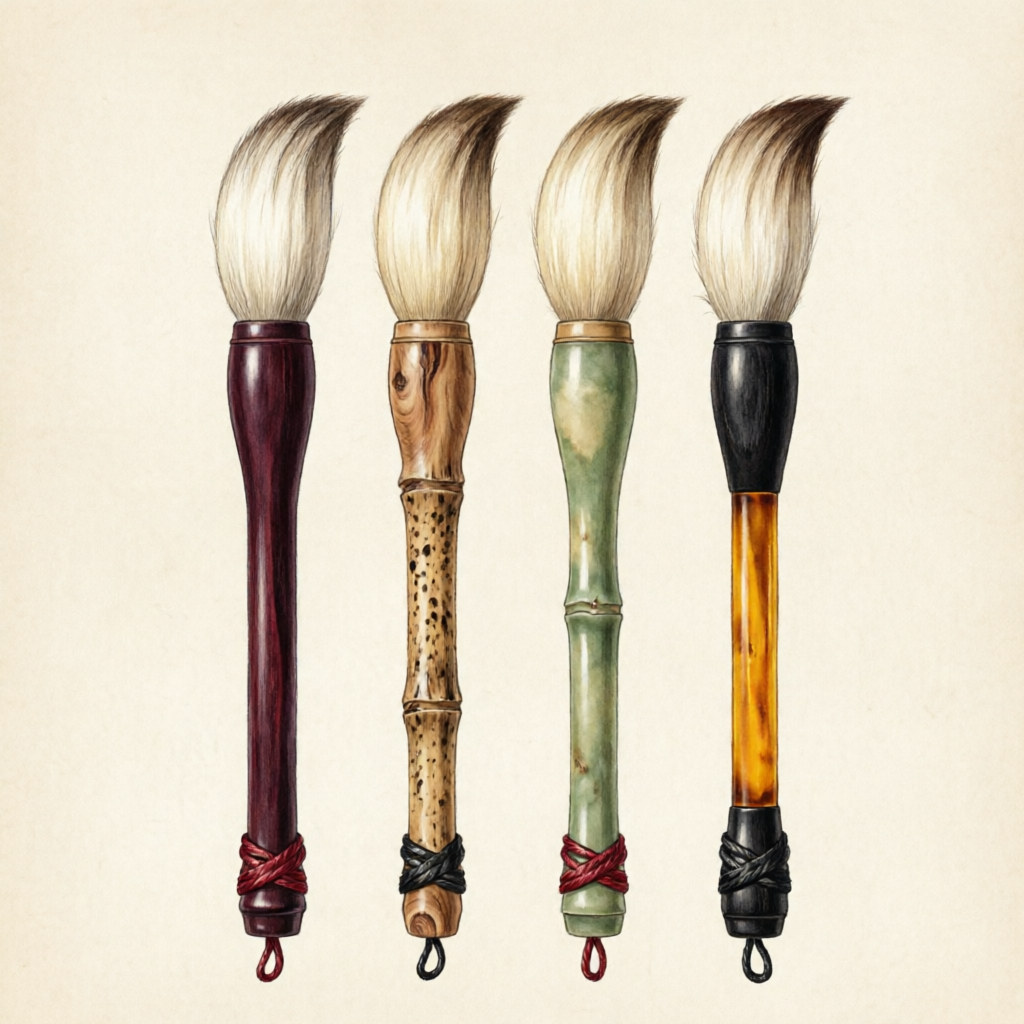
Hubi (Huzhou Brush)
Overview
Hubi (湖笔), also known as Huzhou brush or "Huying," is a traditional Chinese writing brush originating from Shanlian Town in Nanxun District, Huzhou City, Zhejiang Province. As one of the "Four Treasures of the Study" (文房四宝), Hubi has been celebrated for its superior quality and exquisite craftsmanship for centuries. The brush is distinguished by its characteristic "black tip" (黑子), referring to the transparent, well-defined tip of the brush hair that enhances its writing performance. Hubi represents not only a remarkable cultural artifact but also a testament to Chinese traditional craftsmanship and cultural heritage.
History
The history of Hubi dates back to the Southern Song Dynasty (1127-1279), though it gained widespread fame during the Yuan Dynasty (1271-1368). Before the rise of Hubi, Xuanbi (宣笔) from Xuanzhou (modern-day Xuancheng, Anhui) was the most renowned writing brush in China. However, due to the turmoil of war and migration of brush craftsmen from Xuanzhou to Huzhou during the Southern Song Dynasty, the center of brush production gradually shifted to Huzhou.
According to historical records, during the Yuan Dynasty, craftsmen such as Feng Qingke and Lu Wenbao refined brush-making techniques in Huzhou, establishing the region's reputation for superior brushes. The famous calligrapher Zhao Mengfu of the Yuan Dynasty played a crucial role in popularizing Hubi. His endorsement of local brushes, particularly those made by Feng Yingke, led to the "Three Perfections of Wuxing" (吴兴三绝), which included Zhao's calligraphy, Qian Shunju's painting, and Feng's brushes.
The brush industry in Shanlian Town flourished during the Ming and Qing dynasties. Brush craftsmen from Shanlian established shops in major cities across China, including Beijing, Shanghai, and Suzhou, spreading the fame of Hubi. Despite facing challenges during periods of war and political upheaval, particularly during the Japanese occupation in the 1940s, the tradition of Hubi production has been preserved and continues to thrive today.
Key Information
| Feature | Description |
|---|---|
| Chinese Name | 湖笔 (Húbǐ) |
| Alternative Names | 湖颖 (Húyǐng) |
| Origin | Shanlian Town, Nanxun District, Huzhou, Zhejiang Province |
| Emergence | Southern Song Dynasty (1127-1279) |
| Recognition | One of the "Four Treasures of the Study" (文房四宝) |
| Product Category | Writing brush (毛笔) |
| Protection Level | National intangible cultural heritage (国家级非物质文化遗产) |
| Main Materials | Goat hair (羊毫), weasel hair (狼毫), rabbit hair (紫毫), and combinations (兼毫) |
| Distinctive Feature | "Black tip" (黑子) - transparent, well-defined brush tip |
Cultural Significance
Hubi is not merely a writing instrument but a cultural symbol representing the essence of Chinese calligraphy and painting traditions. As a representative product of Huzhou's cultural environment, Hubi embodies the region's rich literary and artistic heritage. The brush has been celebrated in literature and art, with historical figures such as the Tang Dynasty poet Bai Juyi praising its craftsmanship with the lines "selecting one hair from a thousand thousand" (千万毛中拣一毫) and "though the hair is light, the labor is heavy" (毫虽轻,功甚重).
The production of Hubi has been interwoven with local customs and traditions. Shanlian Town hosts annual commemorations for Meng Tian (蒙恬), traditionally credited with inventing the writing brush during the Qin Dynasty. These celebrations, held on the 16th day of the 3rd and 9th lunar months, reflect the deep cultural reverence for brush-making in the region.
In contemporary times, Hubi has been integrated into modern cultural promotion and tourism. Short dramas and media productions featuring intangible cultural heritage elements, including Hubi making, have attracted visitors to experience traditional craftsmanship firsthand. As tourist Huang Haiying noted, "being able to personally experience the intangible cultural heritage production" has enhanced Hubi's visibility and appeal in modern cultural tourism initiatives.
Modern Status
Today, Hubi production continues to thrive while facing challenges in preservation and innovation. In 2002, Hubi was designated as a geographical indication protection product, and in 2006, its production technique was listed among the first batch of national intangible cultural heritage items in China, providing formal protection and recognition.
The modern Hubi industry includes several key enterprises, such as Shanlian Hubi Factory in Huzhou and Wang Yipin Zhai Brush Store in Hangzhou. These institutions produce approximately 7 million brushes annually, with products ranging from practical writing instruments to decorative pieces for tourists. Notable varieties include the "Lanting," "Echi," "Cuiheng Chun," "Xiling Hanshi," and "Banpingshan" series, which are acclaimed as "tourist treasures."
Despite these positive developments, the Hubi industry faces challenges including the decline of traditional craftsmanship, the migration of skilled artisans to other professions, and the impact of modern writing tools. To address these issues, various measures have been implemented, including the establishment of training programs, cultural heritage preservation initiatives, and promotional activities to raise awareness about Hubi's cultural value.
References
-
Li, X. (2018). The Art of Chinese Calligraphy: History, Techniques, and Cultural Significance. Oxford University Press.
-
Wang, H. (2020). Traditional Crafts of China: Brush-Making in Huzhou. Zhejiang Cultural Publishing House.
-
Chen, Y. (2019). "Intangible Cultural Heritage Preservation in China: The Case of Hubi Production." Journal of Cultural Heritage Studies, 12(3), 45-62.
-
Zhang, L. (2021). From Xuanbi to Hubi: The Evolution of Chinese Writing Brushes. Beijing: Cultural Relics Publishing House.
-
UNESCO. (2022). Intangible Cultural Heritage Inventory: Traditional Chinese Brush Making. Retrieved from https://ich.unesco.org