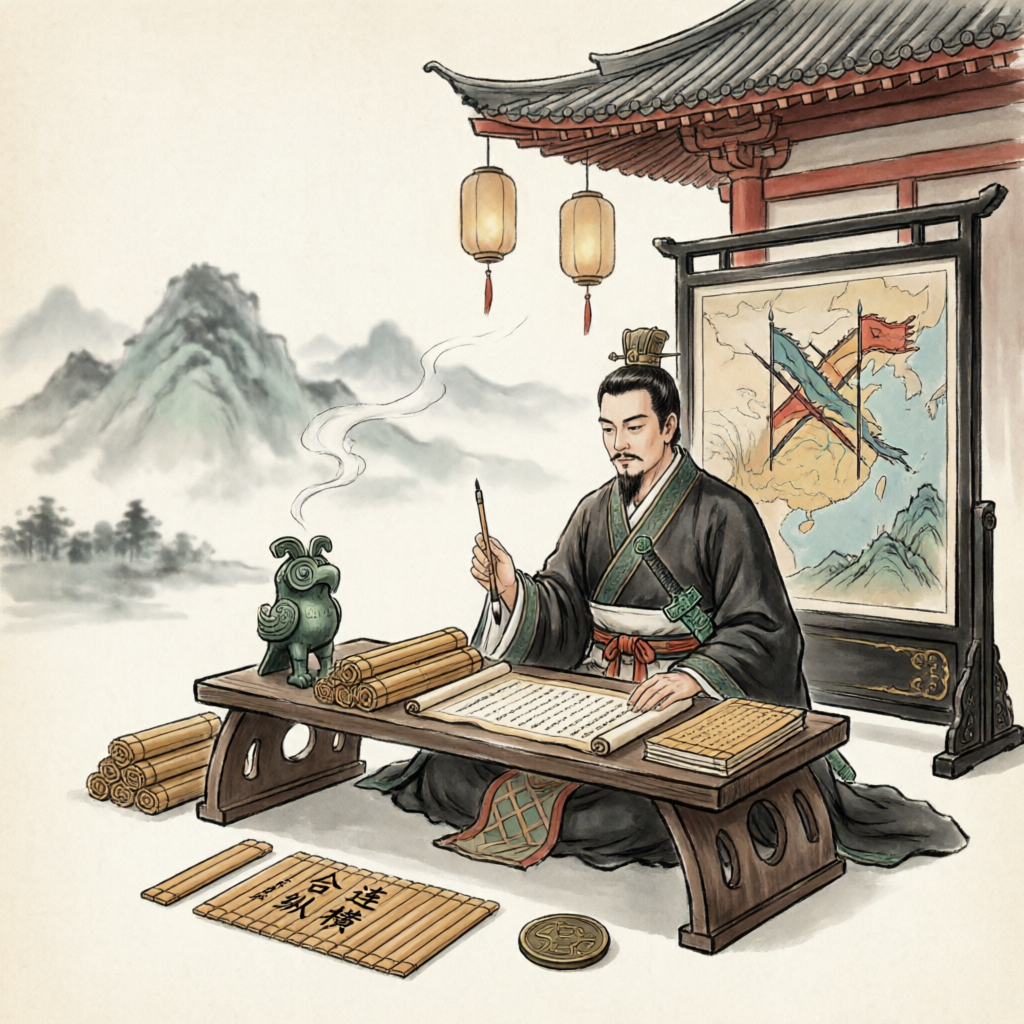
The Art of Vertical and Horizontal Strategy
Overview
The Art of Vertical and Horizontal Strategy (纵横术, zòng héng shù), also known as the "Art of Vertical and Horizontal," refers to a set of diplomatic and strategic methods employed by political strategists and diplomats during the Warring States period (475-221 BCE) through the Qin and Han dynasties in ancient China. This sophisticated approach to international relations was characterized by its focus on negotiation tactics, alliance formation, and psychological manipulation to achieve political objectives in a complex geopolitical landscape.
The term itself derives from two primary strategies: "vertical alliance" (合纵, hé zòng) and "horizontal alliance" (连横, lián héng). These approaches represented opposite diplomatic strategies that emerged during the turbulent period when numerous states vied for dominance in China before the eventual unification under the Qin Dynasty.
History
The Art of Vertical and Horizontal Strategy flourished during the Warring States period, one of the most turbulent and intellectually vibrant periods in Chinese history. As the Zhou Dynasty weakened and central authority collapsed, numerous independent states emerged, each vying for supremacy. This created a complex "balance of power" system where diplomatic maneuvering became as important as military strength.
The philosophical foundation of this strategic approach is often attributed to Gui Guzi (鬼谷子), a mysterious figure from the late Spring and Autumn period who is said to have taught many of the most famous strategists of the era. The surviving classic text Guiguzi (《鬼谷子》) presents many of the core principles of this strategic thinking.
The most prominent historical practitioners of this art were Su Qin (苏秦) and Zhang Yi (张仪), who lived during the late Warring States period. Su Qin famously organized the "vertical alliance" of six states against the rising power of Qin, while Zhang Yi served Qin and implemented the "horizontal alliance" strategy to break up this coalition. Their dramatic competition exemplifies the strategic thinking that characterized this period.
Key Information
| Aspect | Description |
|---|---|
| Chinese Name | 纵横术 (zòng héng shù) |
| Alternative Names | 纵横之术, 钩距之术, 长短术 |
| Historical Period | Warring States period to Qin-Han transition (475-220 BCE) |
| Key Texts | Guiguzi (12 chapters), Strategies of the Warring States (33 chapters), Su's Essays (31 chapters), Zhang's Essays (10 chapters) |
| Key Figures | Su Qin, Zhang Yi, Gui Guzi (attributed) |
| Core Principles | Psychological manipulation, alliance formation, strategic positioning, understanding motivations |
| Primary Application | Diplomacy, international relations, political negotiation |
Cultural Significance
The Art of Vertical and Horizontal Strategy represents one of China's most sophisticated contributions to political and diplomatic thought. Its principles have influenced Chinese strategic thinking for centuries, providing a framework for understanding power dynamics in international relations. The strategies developed during this period established patterns of diplomatic thinking that continue to resonate in modern political science and international relations theory.
The Strategies of the Warring States (《战国策》), though not written by the disciples of the strategists themselves, preserves many of their speeches and tactics, serving as an invaluable resource for understanding the practical application of these methods. This collection of historical accounts reveals how persuasion, psychological insight, and strategic positioning could determine the fate of nations.
In Chinese cultural memory, the figure of the master strategist who can sway the course of history through eloquence and insight remains a powerful archetype. This tradition has influenced countless literary works and continues to shape Chinese perspectives on diplomacy and international relations.
Modern Status
While the specific geopolitical context of the Warring States no longer exists, the principles of the Art of Vertical and Horizontal Strategy continue to hold relevance in modern diplomatic practice, business negotiations, and strategic thinking. The emphasis on understanding motivations, forming strategic alliances, and employing psychological tactics remains applicable in contemporary international relations.
Modern scholars continue to study these ancient texts for insights into negotiation theory, diplomatic strategy, and psychological manipulation. The Guiguzi and other related classics are analyzed not only as historical documents but as sources of practical wisdom applicable to various fields beyond politics, including business management, legal negotiation, and conflict resolution.
The strategies have also found expression in modern Chinese foreign policy, where elements of alliance formation and strategic positioning can be observed in China's approach to international relations. The historical examples of successful and failed applications of these strategies provide valuable case studies for contemporary diplomats and strategists.
References
-
Chen, Guying. The Art of War and Diplomacy in Ancient China. Cambridge University Press, 2018.
-
Levi, Juan. Invention of Liège: The Rise of the State in China. University of California Press, 2017.
-
Yuan, Zheng. Strategic Culture and Grand Strategy in Chinese History. Princeton University Press, 2020.
-
Ames, Roger T., and Rosemont, Henry Jr. The Art of Rulership: A Translation of the Chinese Classic Guanzi*. State University of New York Press, 2019.
-
Schwartz, Benjamin I. The World of Thought in Ancient China. Harvard University Press, 2018.