Overview
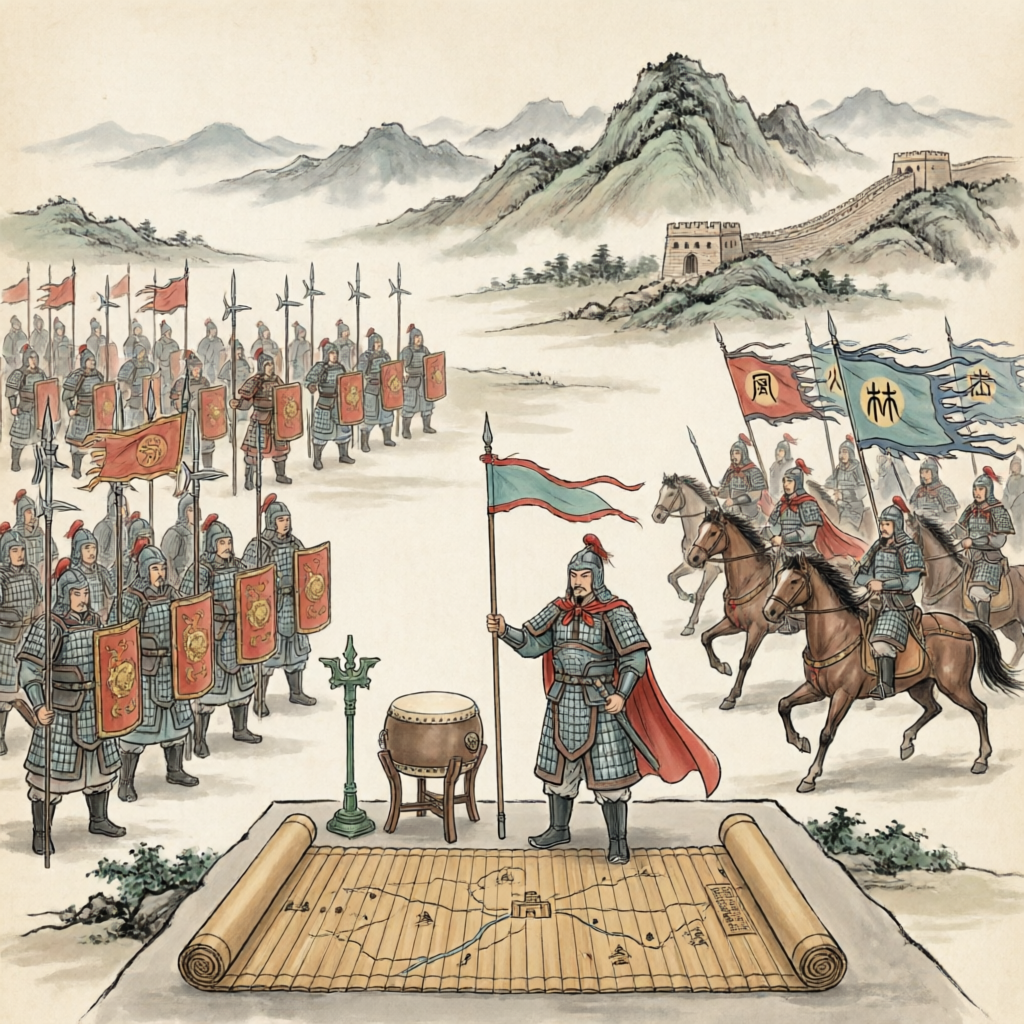
The School of the Military (兵家, Bīng Jiā) refers to both ancient Chinese military strategists and the philosophical school focused on the art of war. This tradition encompasses military thought, strategy, tactics, and the broader understanding of warfare in ancient Chinese civilization. The term "Bing Jia" has multiple meanings, including military commanders, strategists, and the scholarly tradition that studied military affairs. The concept dates back to ancient China and represents one of the Hundred Schools of Thought that flourished during the Spring and Autumn and Warring States periods.
History
The origins of military thought in China can be traced to the earliest dynasties, but the formal categorization of "Bing Jia" as a distinct school appears in historical records during the Han Dynasty. The Book of Han (汉书, Hàn Shū), specifically in the "Treatise on Literature" (艺文志, Yì Wén Zhì), provides one of the earliest formal definitions of the school: "The School of the Military probably originated from the ancient position of Sima (司马), which was responsible for the king's military preparations." This indicates that military thinking in China had institutional roots in the royal court.
During the Spring and Autumn (770-476 BCE) and Warring States (475-221 BCE) periods, as political fragmentation increased, military strategy became increasingly important. This period saw the emergence of influential military thinkers such as Sun Tzu (孙子), author of The Art of War (孙子兵法, Sūnzǐ Bīngfǎ), and Sun Bin (孙膑), whose The Art of War by Sun Bin (孙膑兵法, Sūn Bìn Bīngfǎ) focuses on military strategy. These works, along with others from the period, formed the foundation of Chinese military philosophy.
Key Information
| Aspect | Description |
|---|---|
| Chinese Name | 兵家 (Bīng Jiā) |
| Pronunciation | bīng jiā (Pinyin) |
| First Appearance | Book of Han (汉书·艺文志) |
| Major Periods | Spring and Autumn, Warring States, Han Dynasty |
| Key Figures | Sun Tzu (孙子), Sun Bin (孙膑), Wu Qi (吴起) |
| Major Works | The Art of War, The Art of War by Sun Bin, Six Secret Teachings |
| Classification | One of the Hundred Schools of Thought |
Cultural Significance
The School of the Military has had profound influence on Chinese culture, politics, and philosophy. Military texts were not merely practical guides for warfare but were also studied by statesmen and scholars as essential components of governance. The famous saying "Victory and defeat are common in military affairs" (胜败兵家常事) reflects the pragmatic approach of military thinkers to both success and failure in warfare.
The concept of "territories that military strategists must contend for" (兵家必争之地, bīng jiā bì zhēng zhī dì) became a fundamental principle in strategic thinking, applied not only to military campaigns but also to political and economic competition. This demonstrates how military philosophy permeated various aspects of Chinese strategic thinking.
During the Wei-Jin period (220-420 CE), the term "Bing Jia" also referred to soldiers themselves, indicating the social status of military personnel during this era. This broader usage shows how the concept evolved beyond its original philosophical meaning to encompass social and military organization.
Modern Status
Today, the School of the Military continues to influence military thought worldwide, particularly through the enduring influence of The Art of War by Sun Tzu. This text has been translated into numerous languages and studied in military academies around the world. The principles of strategy, deception, and psychological warfare articulated in ancient Chinese military texts remain relevant in modern military and business contexts.
Contemporary scholars continue to research and interpret classical military texts, uncovering new insights into ancient Chinese thought. Archaeological discoveries, such as the 1972 excavation of Han Dynasty tombs that previously unknown versions of Sun Bin's The Art of War, have expanded our understanding of this tradition.
The study of the School of the Military has also become interdisciplinary, incorporating perspectives from history, philosophy, political science, and international relations. This broader approach has enriched our understanding of how ancient Chinese military thought continues to inform contemporary strategic thinking.
References
-
Sawyer, Ralph D. The Seven Military Classics of Ancient China. Basic Books, 1993.
-
Ames, Roger T. and Rosemont, Henry Jr. The Analects of Confucius: A Philosophical Translation. Ballantine Books, 1998.
-
Lewis, Mark Edward. Sanctioned Violence in Early China. State University of New York Press, 1990.
-
Loewe, Michael and Shaughnessy, Edward L. The Cambridge History of Ancient China: From the Origins of Civilization to 221 B.C. Cambridge University Press, 1999.
-
Brooks, E. Bruce and Brooks, A. Taeko. The Original Analects: Sayings of Confucius and His Disciples. Columbia University Press, 1998.